
Comics Price Guide
ComicsPriceGuide.comComics
2.6142.00 Reviews
- Version
- 1.4.27
- Installs
- 10.00K
- Age Rating
- Teen
Screenshots
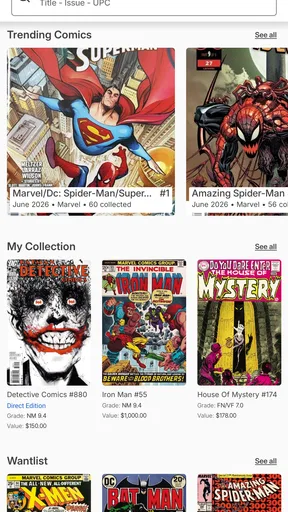
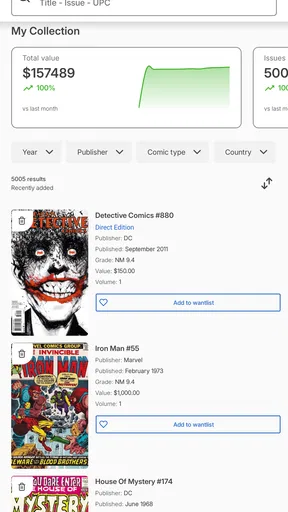
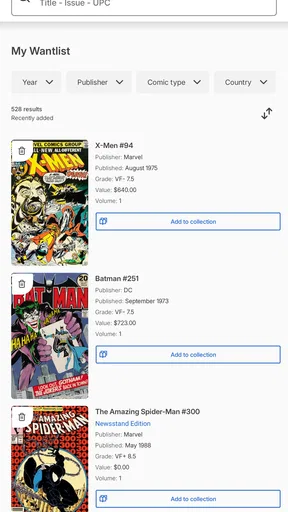

Our Review of Comics Price Guide
 Analysis by Appyee
If you collect comics casually, the difficult part is often not finding a title. It is keeping track of what you own, identifying the right issue, and getting a useful idea of its market value without opening several unrelated tools. Comics Price Guide is built around that practical problem. I used it as a reference app for comic valuations and collection work, and my impression is that it is most useful when treated as a focused lookup tool rather than a complete replacement for careful collecting research.
The app comes from ComicsPriceGuide.com and sits in the Comics category. It is free to install, with optional in-app purchases ranging from $8 to $59.99 per item. The free entry point makes it easy to test with a small collection before deciding whether its paid options fit your habits. Its audience is marked Teen, and the app runs on Android 7.0 or later, so it remains accessible on many older devices.
How I use it for a reliable collection routine
My baseline workflow starts with one comic at a time. I first identify the publisher, series, issue number, and cover details, then use the app to locate the matching record instead of searching only by a broad character name. That small discipline matters because comic titles can have reprints, annuals, special editions, and similarly named series. A quick search based on incomplete information can lead to a plausible-looking but incorrect result.
Once I find the issue, I treat the displayed valuation as a starting point, not an automatic selling price. Condition, completeness, restoration, signatures, printing differences, and demand can all change what a real buyer might offer. The app is helpful for organizing the first estimate, but it should not replace checking the actual copy in your hand or comparing it with current marketplace activity.
A realistic use case is sorting a family collection before a move. I would separate the comics by publisher or series, identify the issues that look unusual, and record the most promising entries first. That prevents spending an entire afternoon researching every inexpensive comic with equal attention. The app works best in this kind of triage: it helps me decide which books deserve closer inspection.
The most useful habit is to separate identification from valuation. First make sure the record matches the physical comic; only then use the value information. This avoids a common beginner mistake: accepting a high-looking number attached to the wrong issue, variant, or edition.
Collection work also benefits from consistency. I would use the same naming approach each time, keep issue numbers together, and avoid adding a book while distracted by a similar cover. If I am handling a large box, I prefer short sessions and a simple repeatable order: identify, verify, note condition, then move on. That method is less exciting than browsing, but it produces a much cleaner collection record.
What the free starting point is good for
The free installation gives newcomers a low-risk way to understand the app’s basic workflow. I would recommend beginning with comics whose details are easy to verify, such as clearly numbered issues from a known run. That lets you learn the search behavior before tackling older books with faded covers or confusing publication histories.
It is also a sensible tool for an occasional seller who needs an initial sense of where to focus. If you inherited a box and only want to identify potentially important items, a dedicated comic price guide is more convenient than relying on general web searches. The app’s purpose is narrow enough to be useful: it keeps the research centered on comics instead of mixing results with unrelated collectibles.
However, free access should not be confused with a complete collection-management solution. The paid items can cost from $8 to $59.99, so I would not purchase anything until I understood exactly which part of my workflow required it. For a small collection, the free experience may be sufficient. For a serious collector, the decision depends on whether the extra access saves repeated research time rather than simply adding more information to browse.
Settings and preparation that make the process smoother
There are no settings I would change blindly. My practical approach is to check the app’s available account, display, and collection-related options when I first install it, then keep only the choices that support my routine. The important point is not to hunt for imaginary automation. Comics Price Guide is valuable when I use its confirmed lookup and collection functions deliberately, not when I expect it to grade a comic for me.
Before entering a long run, I prepare a small reference note outside the app with the series name, issue range, and any unusual cover wording. This is especially useful when dealing with boxes collected over many years. It reduces repeated handling and makes it easier to distinguish a standard issue from a special or later printing.
I also check the physical comic before searching whenever possible. A quick look at the cover, issue number, publisher mark, and visible condition gives me better search terms. If the cover is damaged, I use the clearest remaining details rather than guessing from the character alone. That approach is slower for one comic but faster across an entire collection because it reduces false matches.
On an older phone, I would keep the workflow simple and avoid switching between too many apps at once. The minimum operating-system requirement is Android 7.0, which is helpful for users keeping an older device as a collection-room tool. Still, the age of a device can affect how comfortable long cataloging sessions feel, even when the app itself installs successfully.
The app is rated 2.6 on average from around 208 ratings, with around 142 written reviews. I see that as a reason to test the interface personally rather than assume it will suit every collector. A price guide can be useful in principle while still feeling awkward for someone who expects a polished, highly automated catalog.
Faster patterns for repeated cataloging
When I have several comics from the same run, I keep the series context in mind instead of treating each book as an isolated search. The issue number becomes the main checkpoint, while the cover and publisher details confirm that I am in the right place. This is quicker than starting a broad character search for every item.
Another efficient pattern is to create a priority queue. I begin with comics that are older, unusually well preserved, signed, apparently scarce, or connected to a recognizable storyline. Common modern issues can wait until the higher-interest group is identified. This does not guarantee that the first group is valuable, but it makes my available time work harder.
For a seller preparing a conversation with a shop or private buyer, I would keep three separate notes: the guide’s indication, my condition observations, and the price actually being discussed. Combining those into one number creates false certainty. Keeping them separate makes it easier to explain why a guide estimate and a real offer may differ.
For an insurance or inheritance inventory, I would be even more careful. The app can help identify and organize comics, but I would also photograph covers, backs, distinctive defects, and any included pages. A valuation without a clear record of the physical item is difficult to defend later. The app supports the research portion of that task; it is not the entire documentation process.
A useful repeatable habit is to mark uncertainty immediately. If I am unsure whether a comic is a first printing, a reprint, or a variant, I do not quietly choose the most valuable-looking entry. I leave the identification as a research question and return to it with better evidence. That restraint is one of the clearest differences between responsible cataloging and optimistic guessing.
Where experienced collectors still need outside judgment
The app’s central limitation is also the reason a price guide should be used carefully: a database value is not the same as a guaranteed transaction price. Condition grading is subjective, and small defects can have a large effect on collector interest. A folded corner, detached staple, missing insert, writing, or restoration can change the conversation completely.
I would also avoid using the app alone to settle disputes about editions. If two records appear similar, compare every visible clue on the comic and consult a specialist source when the distinction matters financially. The app can narrow the search, but a high-stakes identification deserves more than a quick tap on the first matching result.
Collectors who mainly want live auction comparisons may prefer a marketplace-focused service. Someone building a detailed personal database with extensive photographs, custom fields, and advanced reporting may also find a general collection manager more suitable. Comics Price Guide is a better fit when the main question is, “What is this comic, and what guide value should I investigate first?”
The current version is 1.4.27, and the app has recorded over 10 thousand installs. That gives it a real user base, but it is still a specialized tool rather than an all-purpose social platform for collectors. I would judge it by whether it helps me identify and prioritize comics, not by expecting the broader discovery, trading, or community features found in other kinds of apps.
Who should use it, and who should skip it
I would recommend it to a beginner sorting a box of comics, a casual collector checking a few issues before selling, or an experienced reader who wants a dedicated reference on an Android device. It is particularly useful for people who prefer a structured search over scattered browser results and who understand that condition still requires human inspection.
I would skip it if I wanted instant, authoritative appraisals with no manual checking. I would also look elsewhere if my priority were real-time sales data, professional grading, or a highly visual catalog with extensive customization. Those needs call for different tools, and no price-guide app should be treated as a substitute for all of them.
The Teen content rating is unlikely to be a concern for ordinary comic cataloging, but parents should still remember that the app relates to a broad comics market rather than a narrowly selected children’s library. The rating describes the app’s audience context, not a promise that every comic discussed through a comic-price resource is suitable for every reader.
My final judgment after building a repeatable habit
Comics Price Guide is most convincing as a first-pass research companion. I like the focused purpose, the free starting point, and the way it can turn an unorganized pile into a list of issues worth investigating. Its strongest advantage is practical: it keeps identification and valuation close together, which is exactly what many casual collectors need when they begin sorting.
My reservations are equally practical. The average rating of 2.6 suggests that the experience will not satisfy everyone, and the optional purchases deserve careful consideration before spending. The app also cannot inspect condition, resolve every edition question, or tell me what a buyer will definitely pay. Those are not minor details; they are central to responsible comic valuation.
If I were recommending it to a friend, I would say: install it, start with ten easy-to-identify comics, and see whether its search and collection workflow feels natural. Use it to establish priorities, not to make promises about final prices. Keep photographs and condition notes for anything important, and compare the guide’s information with real-world sales before making a major decision.
That makes the app a reasonable choice for organized first research, especially for Android users with older compatible devices. It is not the complete answer for professional appraisal or advanced collection management, but with a careful routine it can save time and give a neglected comic box a much clearer starting point.
Verdict
Strengths of Comics Price Guide
- Covers a wide range of comic books, including key issues and variants.
- Useful pricing references for collectors building or valuing a collection.
- Search tools make it easier to locate specific comics and editions.
- Can help identify valuable issues before buying, selling, or trading.
- Provides a dedicated place to track comics and collection details.
Limitations of Comics Price Guide
- Price estimates may differ from current local market sale prices.
- Some features or detailed information may require a paid membership.
- Older or less-known issues may have limited pricing or listing data.
- The interface can feel dense for users unfamiliar with comic grading.
- Values depend heavily on condition, edition, and accurate issue identification.
Similar Picks in This Category
View All
WEBTOON: Manga, Comics, Manhwa
NAVER WEBTOON4.6

MangaToon: Comic & Manga
MangaToon4.3

네이버 웹툰 - Naver Webtoon
NAVER WEBTOON4.3

Tapas – Comics and Novels
Tapas Entertainment Inc.4.2

Lezhin Comics - Daily Releases
LEZHIN ENTERTAINMENT3.3

WebComics - Webtoon & Manga
WEBCOMICS HOLDINGS HK LIMITED4.4
Frequently Asked Questions
What is Comics Price Guide, and what can I use it for?
Comics Price Guide is designed to help collectors research comic books, check estimated market values, and organize information about their collections. You can use it to identify issues, compare pricing details, explore publisher and character information, and keep track of comics you own or want to buy. It is particularly useful when evaluating a collection, preparing a sale, or deciding whether a comic is worth further research.
Does Comics Price Guide provide accurate and current comic book values?
The app can provide helpful pricing estimates based on available catalog information and market data, but values should not be treated as guaranteed selling prices. Comic prices change frequently according to condition, rarity, demand, edition, signatures, restoration, and current sales activity. Before making an important purchase or sale, compare the displayed estimate with recent completed listings, specialist marketplaces, and professional grading information.
Can I use Comics Price Guide to identify a comic book from its cover or issue details?
Comics Price Guide is useful for identifying comics when you already know details such as the title, issue number, publisher, or publication era. Search results can help distinguish similar editions and find relevant catalog entries. However, identification may require careful checking because reprints, variant covers, international editions, and comics with similar artwork can appear very alike. Always verify the issue information before relying on its price.
Does the app help me manage or track my comic book collection?
Collection-management features may allow you to record comics, review items you own, and separate your collection from books you are searching for. This can make it easier to estimate the overall value of your holdings and notice missing issues. The usefulness of the tracking tools depends on the app version and account requirements, so users should review available features, synchronization options, and any limitations before entering a large collection.
Is Comics Price Guide suitable for beginners and professional collectors?
The app can be useful for both new and experienced collectors, although each group may use it differently. Beginners can learn basic information about publishers, issues, and estimated values, while experienced collectors may use it as a quick reference during buying, selling, or cataloging. Serious collectors should still inspect physical condition carefully and consult grading standards, because an online estimate cannot replace a professional evaluation.
